
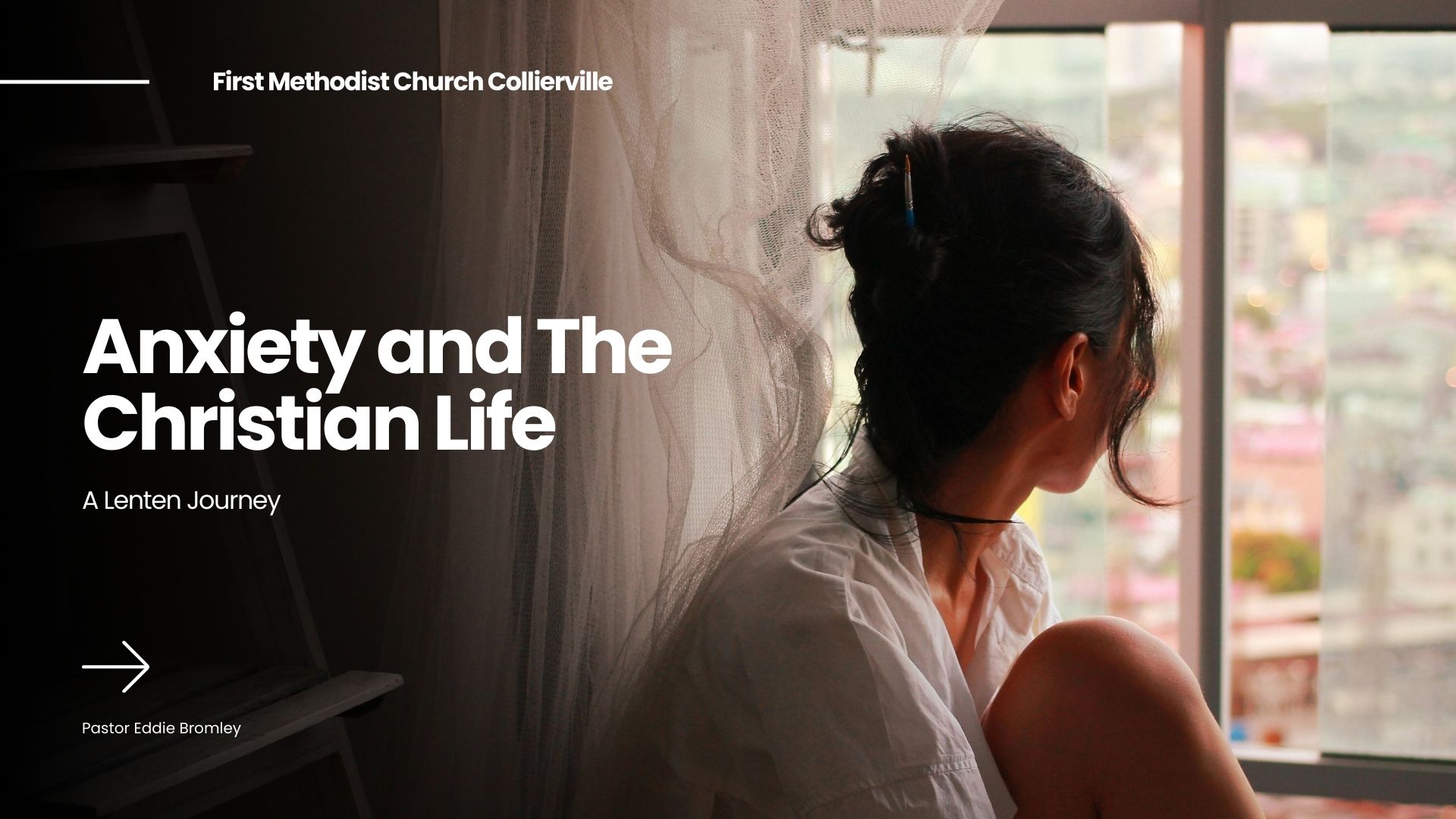
Anxiety and the Christian Life: Part Four

https://www.biblegateway.com/passage/?search=Philippians%204%3A4-9&version=NLT
https://www.biblegateway.com/passage/?search=1%20Samuel%2016&version=NLT
A Guarded Heart in an Anxious World
A Lenten Reflection
Anxiety is one of the most common human experiences, and one of the most misunderstood spiritual ones.
For many of us, anxiety does not show up in dramatic ways. It does not always look like panic attacks or emotional collapse. More often, it arrives quietly, like a slow-moving storm. It appears in the mental rehearsal of a dreaded conversation at two in the morning. It shows up as problem-solving that never quite turns off, even after the event is over. It settles into the tightness in your chest when you think about the future—your finances, your children, your health, your church, or the state of the world.
And for Christians, anxiety often comes with an added burden: guilt. We think, If I really trusted God, I would not feel this way. So instead of bringing our anxiety to God, we hide it, manage it, spiritualize it, or carry it alone. But Scripture treats anxiety seriously—not simply as a failure of faith, but as something that must be redirected.
That is why Paul’s words in Philippians remain so powerful:
“Do not be anxious about anything, but in everything, by prayer and petition, with thanksgiving, present your requests to God. And the peace of God, which surpasses all understanding, will guard your hearts and your minds in Christ Jesus.”
Those are not sentimental words. They are not the language of naïve optimism. Paul did not write them from a quiet retreat center or from a place of comfort and ease. He wrote them from prison.
Paul is writing to the Philippian church while under pressure himself—likely chained, dependent on others for basic necessities, and uncertain whether his imprisonment will end in release or death. Last fall, a group of us had the opportunity to stand inside one of the cells associated with Paul and Silas. It was a very small enclosure, cramped and cold at night, or stuffy and suffocating in warmer weather. Whether or not that exact structure preserves every historical detail perfectly, it still gives you a sense of the kind of confinement Paul endured. This is the world from which Philippians emerges.
The Christians in Philippi were not living easy lives either. Philippi was a proud Roman colony, populated in part by retired soldiers who had pledged their loyalty to Caesar. In that setting, allegiance mattered. To confess that “Jesus is Lord” was not merely a devotional statement. It carried public and political weight. The Philippian believers knew what it meant to live under pressure. They experienced social exclusion, economic vulnerability, and opposition from the surrounding culture. Paul does not dismiss that reality. He does not tell them to calm down or pretend things are fine. He does not promise that circumstances will improve. Instead, he teaches them what to do with their anxiety: do not carry it alone; carry it to God.
It is important to notice what Paul actually says. He does not say, “Never feel anxious.” He says, in effect, When anxiety rises, let it become a prompt for prayer. Paul assumes anxiety will arise. The real question is not whether you feel it, but where you take it. So he gives the church a pattern. Prayer means turning toward God. Petition means naming the burden specifically rather than vaguely. Thanksgiving means remembering who God is and what God has already done. Then comes the promise—not a promise of immediate escape, but a promise of protection. The peace of God will “guard” your hearts and minds.
That word “guard” is especially striking. It is a military term. In a Roman colony filled with soldiers and shaped by imperial power, the image would have been vivid. God’s peace stands watch over your inner life. The threats may still exist outside the walls. The uncertainty may not disappear. But your heart is not abandoned, and your mind is not left undefended.
To see this more clearly, it helps to step back into the Old Testament, because 1 Samuel 16 gives us an earlier picture of anxiety and God’s response to it. The chapter opens with Samuel grieving Saul and dreading what comes next. Saul has failed morally, spiritually, and catastrophically as king. Israel’s future feels unstable, and Samuel is still stuck in sorrow over what has been lost. Then God says to him, “How long will you grieve over Saul, since I have rejected him as king over Israel?” Samuel answers with honesty: “How can I go? If Saul hears about it, he will kill me.”
That is real anxiety. It is political danger, vocational uncertainty, and fear of consequences all at once. And what is so important here is that God does not shame Samuel for being afraid. God does not rebuke him for weakness. Instead, God gives him direction. God gives him an act of obedience. God redirects his focus.
Samuel is sent to Bethlehem. There he meets Jesse’s sons, each one appearing strong, impressive, and kingly. Samuel sees Eliab and assumes he must be the one. But God interrupts that logic with words that have echoed through the centuries: “Do not consider his appearance or his height… People look at the outward appearance, but the Lord looks at the heart.”
The future king is not who Samuel expected. David is the overlooked one, the hidden one, the son left out in the field with the sheep. Samuel does not suddenly gain a full understanding of Israel’s future. He does not receive a complete explanation of how everything will unfold. But he does learn to trust God’s sight instead of his own judgment. That is where peace begins.
And that is the key connection to Paul. Samuel’s peace does not come from knowing how the story will turn out. It comes from knowing who is in charge of how it will turn out. That is also what Paul is trying to teach the Philippians. Anxiety often drives us toward control. Prayer is the act of placing into God’s hands what we cannot manage ourselves. Paul does not promise a quick fix, a guaranteed outcome, or a worry-free life. He promises presence and protection. He promises that the peace of God will stand guard over anxious hearts and minds in Christ Jesus.
That also helps explain why Paul includes thanksgiving. Thanksgiving anchors us in reality. Anxiety narrows our vision until all we can see is what might go wrong. Thanksgiving widens our vision by reminding us how God has already been faithful. It does not deny pain. It does not pretend uncertainty is unreal. It simply refuses to let fear tell the whole story. You may not know what tomorrow holds, but you do know who has held you until now.
This pattern reaches its fullness in Jesus. He echoes the same invitation when He says, “Come to me, all you who are weary and burdened, and I will give you rest.” Notice what He does not say. He does not say, “Figure it out.” He does not say, “Get yourself together first.” He says, “Come to me.” And later, on the night before His death, Jesus tells His disciples, “Peace I leave with you; my peace I give to you. I do not give to you as the world gives.” The world’s peace depends on stability, predictability, and favorable circumstances. Jesus’ peace depends on trust in the Father.
So what do we do with all of this? We stop treating anxiety as something to hide and begin treating it as something to pray. We stop rehearsing our fears in isolation and start naming them before God. We begin learning a new reflex: when anxiety rises, prayer begins. That may sound simple, but it is not easy. It is, however, faithful.
One way to practice this is to make it concrete. Set aside two moments each day, even if you need alarms on your phone. When they go off, pause and name honestly what is making you anxious. Bring it before God directly. Then add one word of thanksgiving—not necessarily for the outcome you want, but for God’s care, God’s past faithfulness, or God’s present nearness. If you are married or close to someone you trust, try doing this together. Instead of only analyzing the problem, pray Philippians 4:6–7 over it.
That kind of practice may seem small, but it begins to retrain the heart. It teaches us that anxiety does not have to become isolation. It can become invitation. The very thing that tempts us to spiral inward can become the thing that turns us toward God.
And that brings us to the final word. Samuel never saw the full story of David. Paul did not yet know how his imprisonment would end. Neither of them had certainty. But both were given peace. Not because the future became safe, but because God proved faithful.
That is still the promise for us. God does not promise the removal of every anxious circumstance. He promises something better: a guarding peace for anxious hearts that are willing to pray.
So do not carry your anxiety alone. Bring it to God. Name it honestly. Thank Him for His faithfulness. And trust that even when the future remains unclear, the peace of God is able to stand watch over your heart and mind in Christ Jesus.